“Terramorph did an outstanding job from start to finish. The team was professional, punctual, and paid close attention to every detail. They transformed the property with high-quality work, and the results exceeded my expectations.”Jack Higgins

Home / Services / Native Landscaping
Native gardens, pollinator habitat and rain gardens
Native Habitat Design & Installation in Toledo and Northwest Ohio
Native gardens that look designed, not abandoned. Terramorph plans and installs native plant beds, pollinator habitat, meadows and rain gardens with plants that belong in Northwest Ohio and can handle our clay.
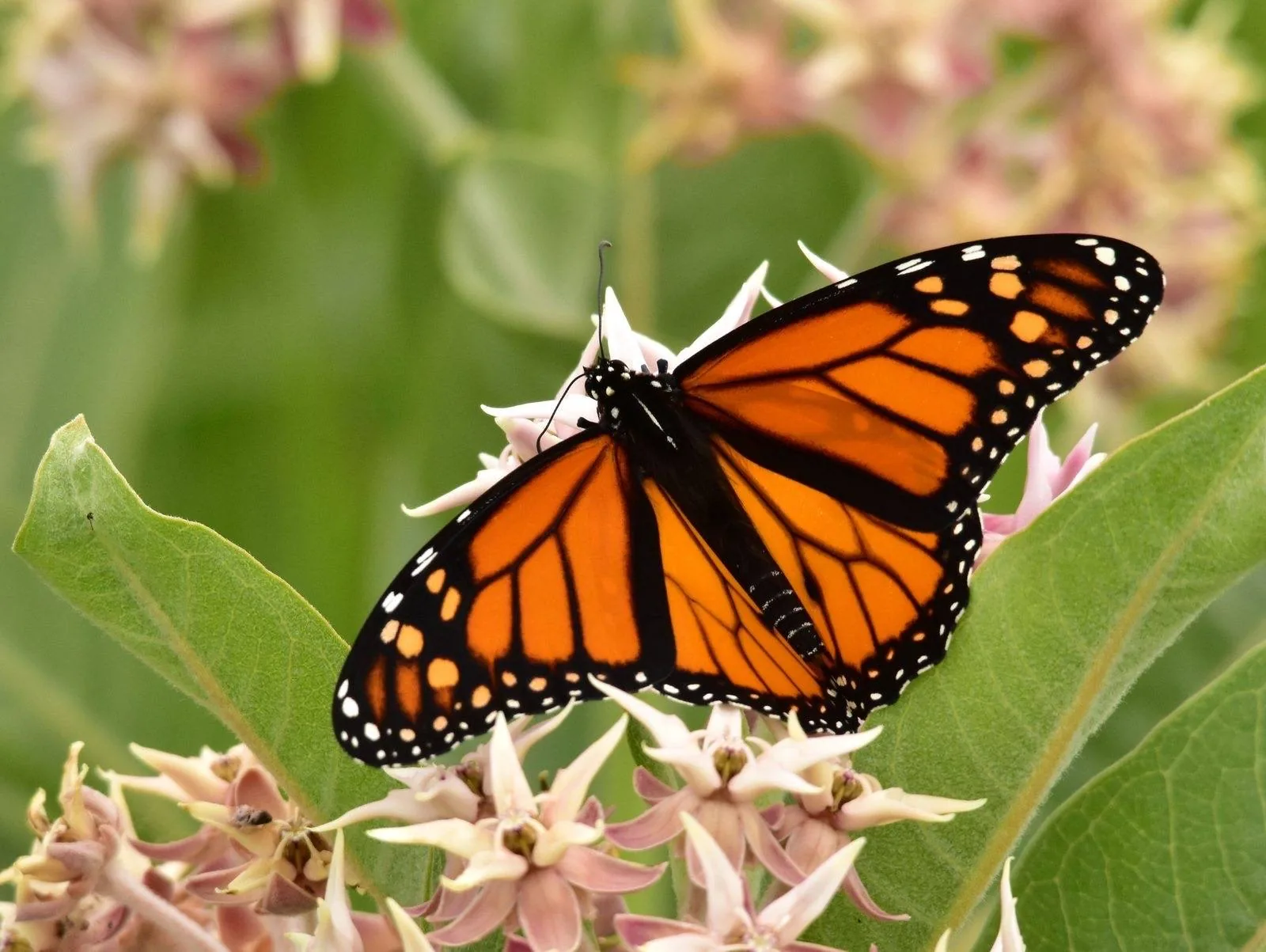
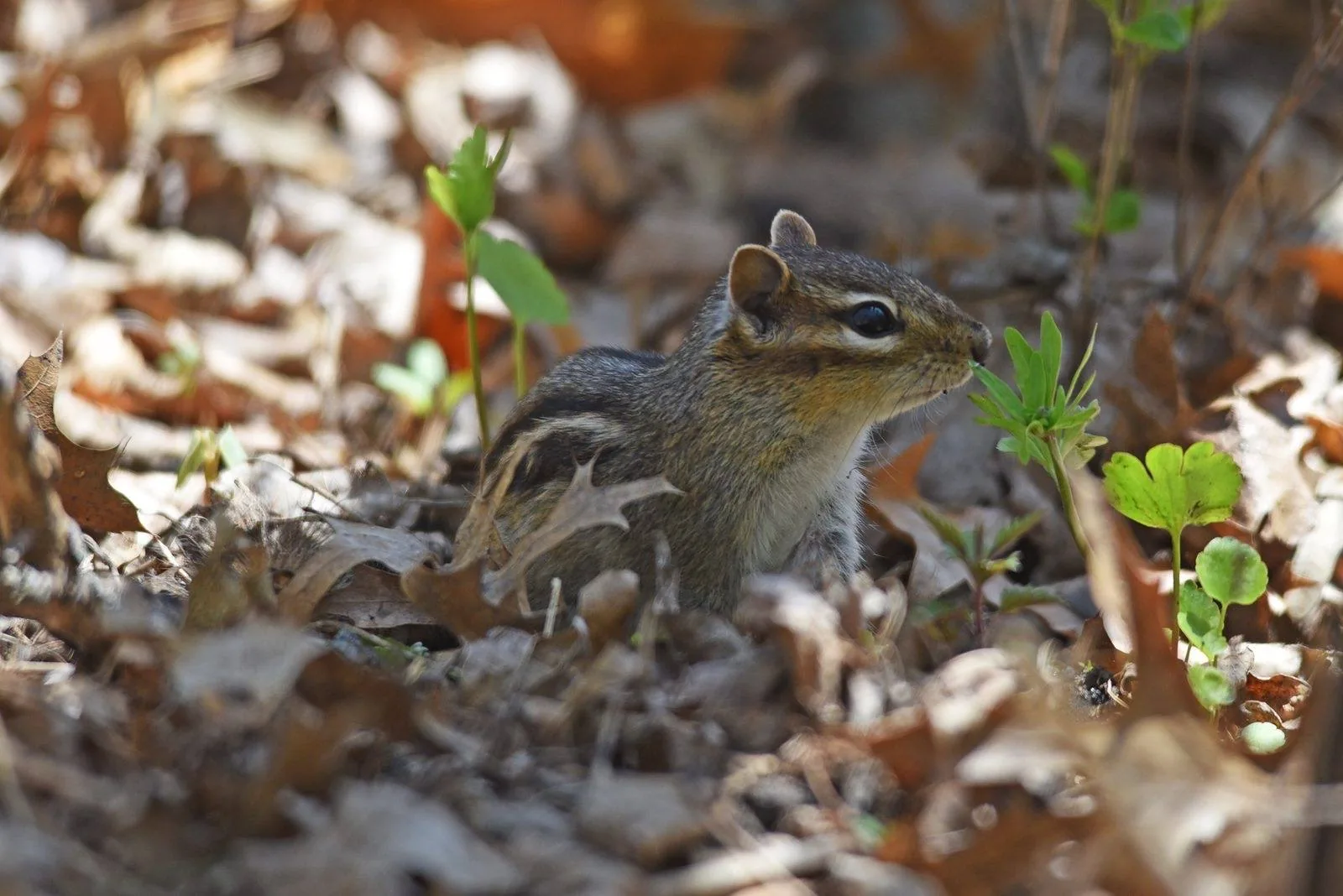
4.9★★★★★220+ Google reviewsReference photo, not a Terramorph project. Photo: Courtney Celley/USFWS (public domain)
Great work at a fair price. They did what they said they were going to do, when they said they would do it.Richard Hansen
A lot of companies tell you what they are going to do. This company far exceeded their word.jon mercurio
Attention to detail was 2nd to none!Adam Raider
They did an excellent job and completed the same day. I would highly recommend them.Teresa Thompson
10/10 Company, the boys made my house look great. Customer Service is great, best deal on the market.Alejandro Urrea
Great work very accommodating and extremely professional will definitely have them do all my future work.Pete Detgen
Great, professional group of guys!Josh Johnson
They did a fantastic job for me. I will recommend them to colleagues.Dominic Urquiola
Fast and reliable. Ty did excellent work and very reasonable cost. I would not hesitate to suggest him to others.Larry Calcamuggio
Amazing service every time and prompt to all appointments.CJ Miller
Sound familiar?
The yard is all lawn and shrubs that feed nothing, need constant mowing, and leave water standing after every rain.
What you get
Clean, intentional native beds full of bees, butterflies and birds that need less mowing, watering and fertilizer once established.
Get a free quoteDesigned, not abandoned
Native gardens that look designed, not abandoned
The biggest worry we hear about native plants is "will it look messy?" It does not have to. A native garden reads as intentional when it has clean bed edges, a mown border or path, plants grouped in drifts instead of scattered singles, and a plan for every season. That is the difference between a designed native landscape and a vacant lot, and it is the part we specialize in.
02Why it matters here
Why native plants matter here
Native plants aren't just a look. They're the base of the local food web. North America has about 2.9 billion fewer birds than in 1970. A yard won't fix that alone, but a neighborhood of native yards adds real habitat back.
- Caterpillars feed birdsRaising one brood of chickadees takes an estimated 6,000 to 9,000 caterpillars, and most caterpillars can only eat the native plants they evolved with.
- A few plants do the heavy liftingNative oaks support the caterpillars of 557 species of moths and butterflies, and black cherry 456. Non-native ginkgo and zelkova support none. Research shows just 14% of native plant groups support more than 90% of caterpillar species, so choosing the right "keystone" plants matters more than planting a lot.
- Yards can make or break a bird populationIn a study of suburban yards, chickadees sustained their population only where more than 70% of the plants were native.
- Ohio's bees need groundOhio has an estimated 400 to 450 bee species. Most native bees live alone rather than in hives, and about 70% of them nest in bare, well-drained soil, so good habitat leaves some sunny ground open.
03What we build
What we design and install
Every project starts with how tidy you want it to look and what the site can support. Thinking about a larger property? Read native prairie landscaping in Ohio and native plants vs. lawn.
- Native plant gardensFront and backyard beds built from native perennials, grasses and shrubs, chosen for your sun, soil and how tidy you want it to look.
- Pollinator habitatBloom from spring through fall, host plants like milkweed for monarchs, and sunny bare patches for ground-nesting bees.
- Meadows and lawn conversionsTurn low-use lawn into a native meadow or prairie-style planting, with mown paths and clean edges.
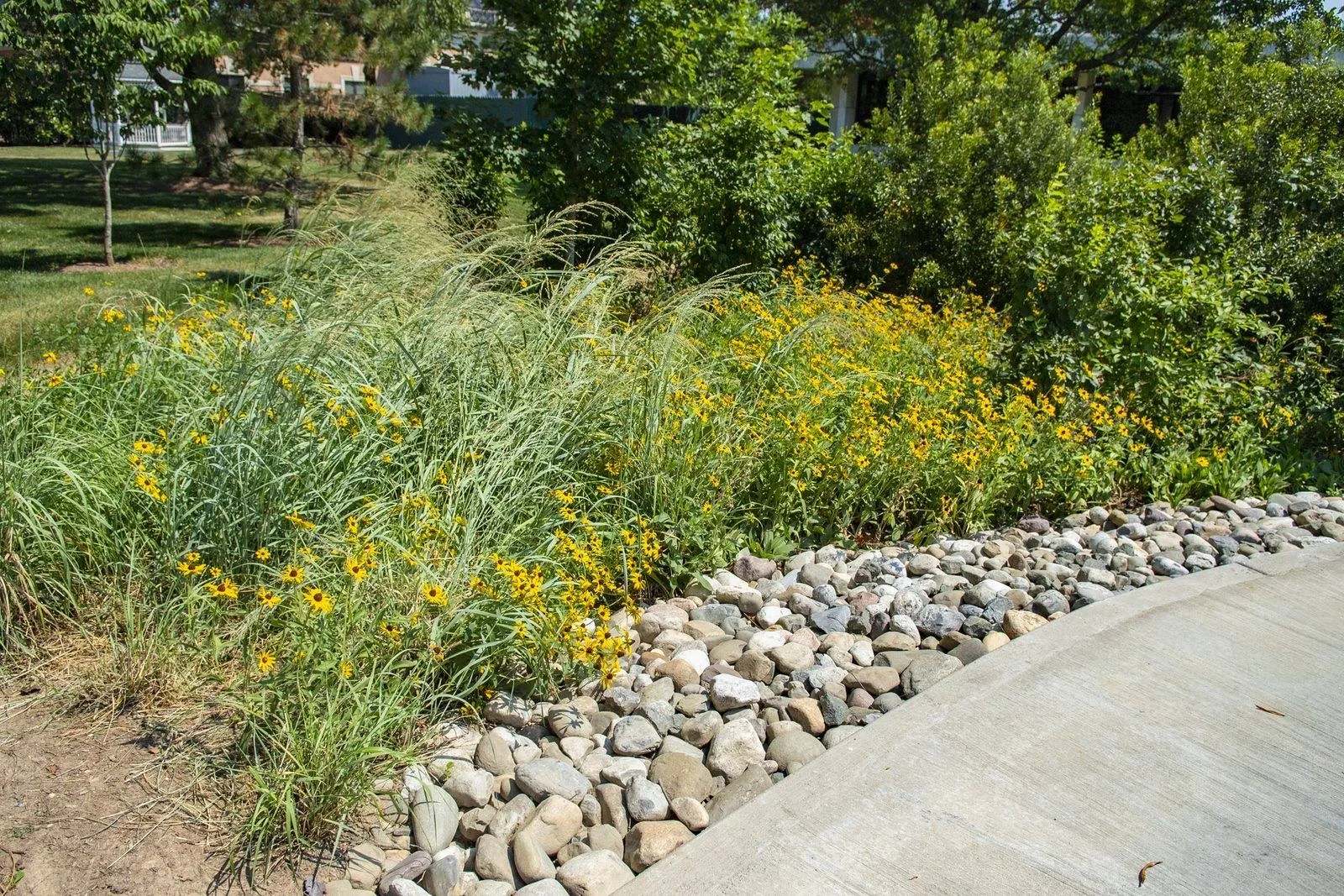
- Rain gardensShallow planted basins that catch roof and driveway runoff and soak it into the ground within a few days.
- Invasive plant removal and replantingWe clear bush honeysuckle, buckthorn, Callery (Bradford) pear and other invasives, then replant with natives so they don't come straight back.
Built for here
Built for Northwest Ohio: Black Swamp clay, Oak Openings sand and zone 6b
Two very different native palettes live within a few miles of each other here. We plan for the soil you actually have and for zone 6b winters (USDA 2023 map). See best plants for Ohio clay soil.
Deep roots help on clay too: native prairie grasses like switchgrass can reach 8 to 11 feet deep and big bluestem 6 to 7 feet, opening paths for water that lawn grass never reaches.
- Clay countryMost of Wood and Lucas County, the old Great Black Swamp: plants that handle slow drainage and wet springs, like swamp milkweed ("a good plant for wet, even mucky, clay soil if there is sufficient sun," per OSU Extension) and switchgrass, which tolerates poorly drained soil and occasional flooding.
- Oak Openings sandWest of Toledo: fast-draining sand over clay, home to about a third of Ohio's state-listed rare plants and animals. Plants like wild lupine thrive there but hate clay.
05Rain gardens
Rain gardens for wet yards and downspouts
A rain garden is a shallow, planted basin that catches runoff from a roof or driveway and lets it soak in, usually within a few days. It isn't a pond. Done right on clay, it means a few things.
Rain gardens are one drainage tool. When a yard needs regrading or a French drain instead, we'll tell you. See drainage solutions.
- A percolation test firstWe check how fast your soil actually absorbs water before sizing the basin.
- A shallower basin on clayWith 2 to 6 inches of compost mixed into the soil so water soaks in.
- Placed safelyAt least 10 feet from the foundation, away from septic systems, and not on steep slopes.
- The right plantsPlants that handle both standing water and summer drought.
Invasives
Invasives: what to remove first
Ohio bans the sale and propagation of 63 invasive plants, including bush honeysuckle, common buckthorn, garlic mustard, autumn olive, tree-of-heaven and Callery pear (banned from sale since January 2023). Bush honeysuckle is the big one locally: it leafs out earlier and holds its leaves later than native shrubs, shading out wildflowers and young trees, and its berries lack the fat migrating birds need. It's best cut in early summer, and treated stumps need watching for at least a year. You're not required to remove existing plants, but replacing them with natives is one of the biggest habitat upgrades a yard can get.
Cost
Cost and what affects it
Cost depends on the size of the area, how much prep it needs (removing lawn or invasives, soil work, drainage), plant sizes (plugs establish fast and cost less, larger pots look finished sooner), and whether you want an establishment-care plan. We give a free estimate and can phase larger conversions over two or three seasons.
Establishment
The first three years
Native gardens are lower-maintenance, not no-maintenance. We offer establishment care so the investment survives those first seasons.
- Year oneWatering and weeding while roots establish, and the plants look small.
- Year twoThey fill in and bloom more.
- Year threeThe bed closes in and weeding drops.
Where we work
Native landscaping across Wood and Lucas County
Native landscaping, pollinator gardens and rain gardens across Perrysburg, Toledo, Maumee, Sylvania, Waterville, Whitehouse, Holland, Monclova, Rossford, Oregon, Bowling Green and the rest of Wood and Lucas County. Free estimates: 419-873-6801. Planning a whole-property approach? See permaculture design.
How we work
Clear estimates, professional work, and clean follow-through.
Homeowners need to know what happens next: Terramorph reviews the property, talks through the goal, explains practical options, and gives a clear estimate before work begins.
Discovery
City, goal, frustration, timeline, range, and photos captured quickly.
Site review
Grade, water flow, access, soil, sun, materials, and maintenance expectations.
Scope
Clear options that connect budget to property improvement and long-term durability.
Build
Professional install, cleanup, walkthrough, and follow-up.
Reviews
Homeowners who hired us.
“I don’t usually leave reviews, but Terramorph honestly deserves one. These guys just get it. You can tell right away they actually care about what they’re doing, not just trying to rush through a job.”Altur Earth
“We are absolutely thrilled with the work Brad and his team completed! They completely redesigned our flower beds, providing us with a potential layout drawing, guiding us in selecting the right flowers, and executing everything perfectly. Besides the excellent craftsmanship, Brad and his team are genuinely kind and considerate.”Kate Vallerand
Questions homeowners ask
Quick answers before you request an estimate.
Still wondering about something? Call 419-873-6801, 7 a.m. to 8 p.m.
How much does native landscaping cost?
It depends on the size of the area, site prep (removing lawn or invasives, soil and drainage work), plant sizes and whether you want an establishment-care plan. Terramorph gives free estimates and can phase larger projects over several seasons.
Are native gardens really low maintenance?
Lower, not zero. The first one to two seasons need watering and weeding while roots establish. By the third season most beds fill in, weeding drops and they need far less water, mowing and fertilizer than lawn.
Will a native garden look messy or get me a weed notice?
Not when it's designed. Clean bed edges, mown borders or paths, plants grouped in drifts and a clear layout make native gardens read as intentional. We design front-yard native beds with neighbors and city expectations in mind.
How big should a rain garden be, and how deep?
It depends on the roof or driveway area draining to it and how fast your soil absorbs water. On Northwest Ohio clay we run a percolation test, keep the basin shallower, and mix compost into the top few inches so water soaks in within a few days.
Do rain gardens attract mosquitoes?
A properly built rain garden drains within a few days, and mosquitoes need standing water for about a week to develop from egg to adult. If water stands longer than that, the design needs adjusting, and we check that during establishment.
Can you convert part of my lawn to a meadow or native garden?
Yes. Most properties do best with a mix: lawn where you play and walk, and native beds or meadow in low-use areas, edges and wet spots. We remove the turf, prepare the soil, plant, and leave clean edges and paths.
Which plants are native to Northwest Ohio?
It depends on your soil. Clay sites suit plants like swamp milkweed, switchgrass, coneflowers and native asters. The sandy Oak Openings area west of Toledo has its own palette, like wild lupine, which won't grow in clay. We match plants to your site.
When is the best time to plant a native or pollinator garden in Ohio?
Spring and fall are both good. Fall planting lets roots grow in cool, moist soil, and many native seeds need a winter to sprout. Spring planting works well for potted plants with good follow-up watering.
Can you remove invasive honeysuckle and buckthorn?
Yes. We cut and treat invasive shrubs like bush honeysuckle and buckthorn, haul them away, check for resprouts, and replant with native shrubs so the area doesn't fill back in with invasives.
Do you work with clay soil and wet yards?
Yes. Most of our area is heavy clay from the old Great Black Swamp. We choose plants that tolerate wet clay, use rain gardens where they fit, and handle regrading or drainage when that's the real fix.

Terramorph at a glance
The short version.
Terramorph LLC is a landscape design and build company based in Perrysburg, Ohio, founded by brothers Ty and Trent Lincoln. We handle native landscaping along with patios, drainage, landscape beds, lighting, lawn care, cleanups, and snow removal for homes and businesses across Wood and Lucas County. 4.9 stars from more than 220 Google reviews, BBB accredited, and estimates are free.
- Based in
- Perrysburg, OH
- Serving
- Wood & Lucas County
- Google rating
- 4.9 from 220+ reviews
- Accreditation
- BBB Accredited
- Founders
- Ty & Trent Lincoln
- Phone
- 419-873-6801
Project savings
Save up to 10% on your project
The bigger the project, the more you save. Mention your code when you request your quote or approve your estimate.
Request My Quote| Your project | You save | Use code |
|---|---|---|
| $10,000 or more | 10% | Y2H1N |
| $8,000 or more | 8% | 7U5C1 |
| $6,000 or more | 6% | 8B2M3 |
| $5,000 or more | 5% | 0O6B2 |
Applies to all Terramorph services. One code per project, based on the project total before tax. Mention the code when you request your quote or before you approve your estimate. Can't be combined with other offers or applied to work already invoiced.

Free estimate
Request a Native Landscaping Quote
- Tell us what you want built, fixed, or cleaned up
- Add photos if you have them, they help
- We follow up to set up a visit and a written quote